
Oak trees—such as the majestic Live Oak (Quercus virginiana) and the fast-growing Laurel (Quercus laurifolia) or Water Oak (Quercus nigra) are integral to Florida's natural landscape and urban canopy. However, Florida’s unique environment, characterized by high humidity, coastal winds, and severe summer storms, makes proper maintenance critical.
Improper pruning can shorten an oak’s lifespan, create structural hazards, and increase susceptibility to pests and diseases. Grounded in standard arboricultural practices from the International Society of Arboriculture (ISA) and the Tree Care Industry Association (TCIA) (specifically aligned with ANSI A300 standards), this guide outlines best practices for keeping Florida's oak trees safe, resilient, and healthy.
Good vs. Bad Pruning Examples
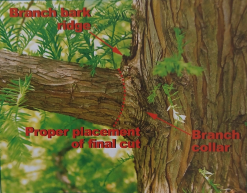
Pruning is more than just removing unwanted branches; every cut leaves a wound that the tree must chemically isolate or "compartmentalize". Understanding proper cut placement and structural management separates beneficial pruning from destructive practices.
1. Proper Cut Placement
Good: The Branch Collar Cut.** The final pruning cut should always sit just outside the branch bark ridge (BBR) and branch collar the swollen area at the base of the limb. Preserving the collar allows the tree to form protective tissue (callus roll) to seal the wound.
Bad: Flush Cuts. Cutting flush to the main trunk removes the branch collar, damaging the tree's internal protective zone. This creates deep, non-healing trunk wounds that encourage wood decay and structural decay.
Bad: Stub Cuts. Leaving a long stub prevents the branch collar from sealing over the cut. The dead wood dies back into the trunk, serving as a highway for fungi and wood-boring insects.
2. Standard Pruning Technique
Good: The 3-Cut Method. For limbs thicker than 1–2 inches in diameter, arborists use a three-step method to reduce weight and prevent the weight of the falling branch from tearing bark down the trunk:
1. Undercut: A cut made 12–18 inches away from the trunk on the underside of the limb.
2. Top Cut: A cut made slightly further out from the undercut to allow the limb to snap cleanly away.
3. Final Cut: Removal of the remaining stub cleanly outside the branch collar.
Structural Canopy Management
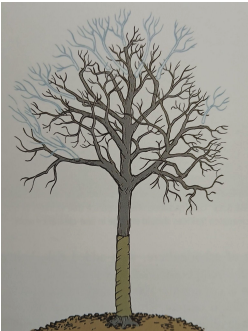
Good: Structural Thinning & Crown Elevation. Selectively removing dead, diseased, or rubbing limbs while maintaining the natural, balanced canopy architecture. Lower branches should be elevated gradually to maintain clear sightlines or structural clearance.
Bad: "Lions-Tailing." Removing all interior foliage and leaves while leaving only small tufts of foliage at the ends of long limbs. This strips energy-producing leaves, shifts weight to the tips of branches, and drastically increases the risk of limb breakage during windstorms.
Bad: Topping or "Hatteras Cut." Indiscriminately cutting main trunks or large limbs to stubs. Topping severely stresses oak trees, triggers a flush of weakly attached shoots (epicormic sprouts), and often starts an irreversible decline.
Canopy Limits: How Much Can an Oak Tree Handle?
Removing foliage strips a tree of its ability to produce food through photosynthesis. ISA standards establish thresholds based on tree age and health:
Young & Establishing Oaks: Can tolerate the removal of up to 20-25% of live foliage in a single pruning cycle to establish strong central leader structure.
Mature, Healthy Oaks: Should generally have no more than 10-15% (up to a strict maximum of 20%) of live canopy removed at one time. Over-pruning mature oaks exposes sensitive bark to sunscald, triggers dense clusters of weak sprouting, and depletes starch reserves.
Overmature or Stressed Oaks: Live tissue removal should be kept below 5-10%, focusing almost entirely on structural deadwood removal.
Risk Reduction Pruning (Storm Readiness)
In Florida's high-wind environment, risk reduction pruning formerly termed "hazard pruning" is essential for safety and property preservation. Rather than stripping the interior canopy, effective storm mitigation focuses on engineering principles:
End-Weight Reduction: Shortening long, heavy, horizontal limbs (especially over structures or driveways) by pruning back to lateral branches that are at least one-third the diameter of the parent limb. This reduces leverage forces acting on the branch attachment point during hurricane-force winds.
Subduing Codominant Stems: When an oak splits into two main stems of equal size, the junction often traps bark ("included bark"), creating a structural failure point. Selectively reducing the length of one stem establishes a single dominant leader and reduces the likelihood of the tree splitting open.
Crown Thinning for Wind Resistance: Lightly thinning dense foliage areas permits wind to pass through the tree ("sail reduction") rather than pushing against a solid wall of leaves.
Recognizing the Stages of Decline
Before performing any pruning work, assessing tree health is crucial. Arborists evaluate oaks using a recognized scale of decline to determine if a tree can safely withstand pruning or if intervention is needed:
Stage 1: Early Stress Symptoms and Characteristics: Minor canopy thinning, reduced seasonal growth shoot length, slight chlorosis (yellowing leaves).
Early Stress Pruning and Management Approach: Corrective pruning allowed. Identify soil/water stressors; perform minor deadwooding.
Stage 2: Moderate Decline Symptoms and Characteristics: Dieback of fine twigs in the outer canopy, presence of epicormic sprouts (water sprouts) along major interior limbs.
Moderate Decline Pruning and Management Approach: Caution: Minimize live branch cuts. Remove safety hazards (deadwood) only; investigate root health.
Stage 3: Advanced Decline Symptoms and Characteristics: Major limb dieback, large fungal fruiting bodies (mushrooms/conks) at the base or main trunk, major trunk decay, severe canopy loss.
Advanced Decline Pruning and Management Approach: Avoid structural live pruning. Risk assessment by an ISA Certified Arborist required to evaluate removal vs. retention.
Soil Care: Basic Benefits of Fertilization
Pruning addresses top growth, but soil health dictates overall longevity. Florida’s sandy soils leach nutrients rapidly, often resulting in deficiencies in nitrogen, potassium, magnesium, and micronutrients like iron or manganese.
Under TCIA and ISA guidelines (ANSI A300 Part 2), fertilizing should be based on diagnostic soil or tissue testing rather than routine guesswork.
Root System Recovery: Slow-release, prescription fertilization aids in root regeneration, helping trees recover from storm damage, root disturbance, or structural pruning stress.
Canopy Density & Disease Resistance: Balanced nutrients improve chlorophyll production, leading to a denser, healthier foliage canopy capable of producing energy for wound compartmentalization.
Stress Mitigation: Proper subsurface root injection fertilization (applying slow-release nutrients 4–8 inches beneath the turf layer) delivers nutrients directly to fine feeder roots without feeding surrounding lawn grass or encouraging surface runoff into aquatic ecosystems.