
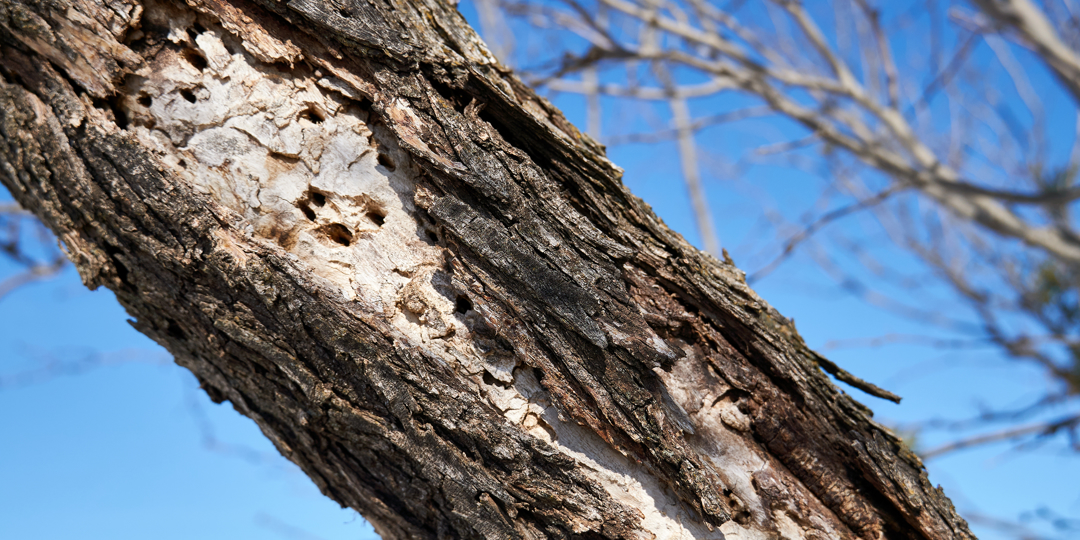
A stressed tree doesn't come with an obvious answer. Some homeowners assume any tree showing damage should come down before it "gets worse." Others hold onto a tree well past the point it can be pruned back to a reasonably safe condition, hoping a trim will fix what's actually a structural problem. Both instincts skip the step that matters most: an actual assessment by a qualified professional, not a guess from the driveway.
The Northwest Houston team's plant-health services can be a starting point when a tree's condition changes. Deciding when to remove vs. when to prune requires a separate look at risk, the available management options, and the owner's goals. Ask what kind of evaluation your situation needs before assuming a routine service estimate will answer every question.
Pruning Is a Health Decision, Not Just a Trim
Homeowners and contractors sometimes use “trim” and “prune” interchangeably. The useful distinction is the objective: appearance, clearance, deadwood removal, or management of a structural concern. A pruning proposal should explain what it is meant to accomplish and which parts of the tree it addresses.
That distinction matters because "should this tree be removed or pruned" is a health and safety question, not an appearance question. A tree that looks a little rough isn't automatically a removal candidate. A tree that looks fine from the ground can still carry a structural problem that only a trained inspection would catch.
What a Tree Risk Assessment Actually Weighs
The International Society of Arboriculture's basic tree-risk assessment instructions distinguish the likelihood of failure, the likelihood of impact on a target, and the consequences of that impact. An assessor considers those factors over a stated time frame. Tree structure, decay, root condition, and prior damage inform the evaluation, but they are not the whole assessment.
A target is something that could be struck, such as a person, building, or vehicle. A limb over an area people rarely enter has a different impact scenario from one over a busy entrance. The assessor evaluates both whether a tree part could fail and whether it could strike the target, not simply that the tree is near a house.
From that evaluation, a qualified assessor can identify mitigation options: specific actions like removing a hazardous limb or reducing a branch's length that lower the risk. What's left after that mitigation is the residual risk.
If pruning cannot reduce the assessed risk enough, removal may be recommended. Other options can include changing how an area beneath the tree is used or taking a closer look through a more detailed assessment. The choice depends on the findings and management goals, not a blanket rule that pruning is better whenever it is possible.
When Pruning Is the Right Call
Pruning can address a defined problem without removing the whole tree. An assessor might recommend removing particular dead branches or reducing a specific branch's length. These targeted actions are not a recommendation to thin every dense canopy or remove a fixed amount of foliage from every tree.
When discussing tree trimming in Spring, ask for the objective and proposed work in writing. The Tree Care Industry Association describes ANSI A300 as standards used to develop tree-care specifications. Ask how the contractor's scope reflects appropriate pruning practice rather than assuming a credential or a low price answers that question.
One note on scope: pruning near energized power lines is specialized, regulated work. That kind of clearance is handled by qualified line-clearance crews coordinating with the utility, not treated as routine tree service. If a tree is tangled in or near a power line, contact the utility first.
When Removal Is the Right Call
Extensive decay or major root loss can make removal a serious consideration, particularly when failure could affect an occupied area. A qualified assessor needs to evaluate the extent and location of the damage and the available options. A visible defect alone does not establish the final recommendation.
None of that means every damaged tree needs to come down. It means the decision should follow an actual assessment of whether a real mitigation option exists, not an assumption that visible damage automatically means removal.
Why a Free Estimate and a Tree Risk Assessment Aren't the Same Thing
A free estimate is an offer to price proposed work, not a promise of a formal tree-risk assessment. Ask what evaluation is included, who will perform it, whether a written report is supplied, and whether separate fees apply. The scope should be clear before the visit.
ISA Certified Arborist and ISA Tree Risk Assessment Qualification are different credentials. Ask about relevant risk-assessment training and the level of assessment proposed rather than assuming certification alone means a person holds a risk-assessment qualification. An inspection has limits, which the assessor should explain.
Getting a Professional Opinion Instead of Guessing
Bring any earlier recommendations, recent construction history, and safe ground-level photos to the discussion. If you're comparing tree-trimming options in Cypress, ask whether the proposed scope addresses the assessor's recommendation. If removal is recommended, request a separate scope rather than assuming it is included in a pruning proposal.
For a property in Tomball, the local tree-trimming service page is a service reference, not an assessment of your tree. Share the actual findings when requesting work. The address alone doesn't determine which option is appropriate.
The existing remove-or-trim overview introduces signs that prompt an inspection. The question here goes a step further: what risk was assessed, what action could reduce it, and what risk would be left? Ask the assessor to set a reassessment timeline suited to the findings rather than applying a fixed interval to every tree.
When to Remove vs. When to Prune FAQs
How is a professional tree-risk assessment different from a quick visual check?
A tree-risk assessment considers likelihood of failure, likelihood of impact, and the consequences over a defined time frame. It considers mitigation and residual risk. Ask about the level of inspection, its limits, and whether further evaluation is needed before making a pruning or removal decision.
Can a tree with visible decay still be safe to keep and prune?
Sometimes, depending on how much of the trunk or root structure is affected and what a specific pruning action can realistically address. That's the kind of judgment call a real assessment is built to answer, not a general rule that applies to every tree with decay.
Does a leaning tree always need to come down?
Not automatically. Lean angle, root condition, and what the tree could hit if it failed all factor into that decision, which is why it requires an on-site evaluation rather than a guess from the street.
How often should a mature tree get reassessed after the first evaluation?
There's no single interval that fits every tree. A qualified assessor sets the follow-up timeline based on the tree's condition and assessed risk. Ask what changes should trigger an earlier visit, such as new damage after a storm or excavation near roots, rather than waiting for a calendar reminder.
Getting a Straight Answer
The pruning-or-removal question isn't about how bad a tree looks. It's about whether a real mitigation option exists once a qualified professional has weighed the tree's condition against what it could affect, and that's a judgment call worth getting from someone trained to make it. Northwest Houston's mature oaks and pines are worth the extra step before a chainsaw settles the question for good.
Monster Tree Service of Northwest Houston offers pruning and removal services. Share any existing assessment when asking for an estimate, and clarify whether further evaluation is needed before a work scope is settled.