
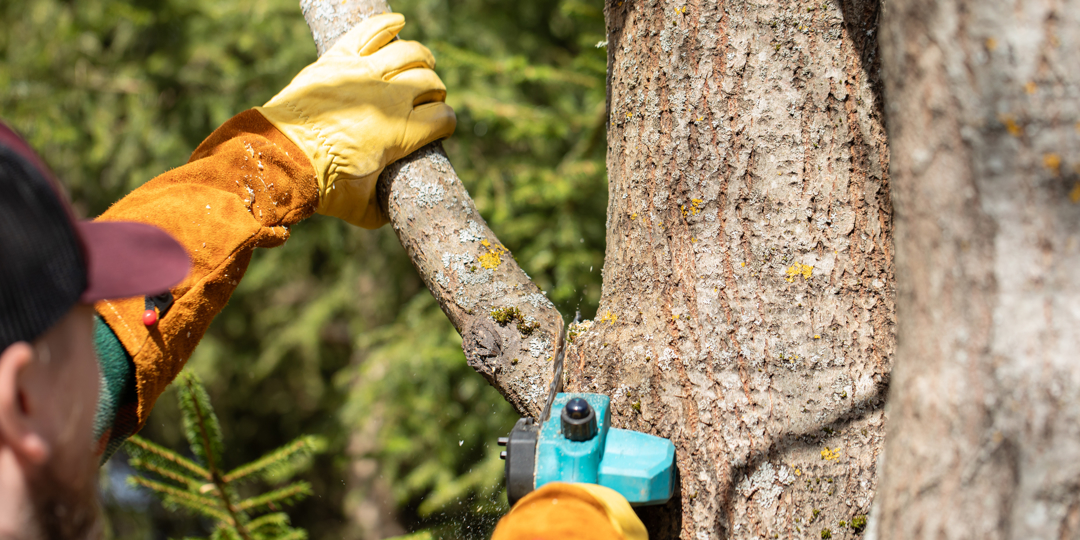
Watch the roads after the next Gulf Coast storm. The trucks appear overnight. A pickup, a ladder, a chainsaw, a stack of business cards. Some of these operators do honest work. A lot of them do not, and you usually find out which kind you hired long after they cash your check. A branch through the roof. A beautiful live oak dying by inches from bad cuts.
People search "arborist vs tree service" expecting a nuanced answer. The real gap between a guy with a chainsaw and a certified arborist is bigger than nuance. It affects your trees, your property, and your wallet.
What "a Guy with a Chainsaw" Really Means
The phrase gets a laugh, but it describes a real business model. Buy a saw. Print some cards. Sell cutting. No training in how trees grow or how they fail. No insurance, in plenty of cases. No plan for the tree past making it smaller.
Drive through any neighborhood and you can spot their work. Topped trees with knobby stubs where a canopy used to be. Limbs stripped bare except for a tuft at the tip. Climbing spikes jabbed into a tree that only needed a light trim, leaving wounds that rot from the inside. Each of those shortcuts weakens the tree a little more. Every one raises the odds it comes down in the next hard wind.
The cheap quote feels great on day one. The real bill shows up later.
What Makes a Certified Arborist Different
A certified arborist is a tested, credentialed tree care professional. The International Society of Arboriculture requires years of documented, full-time experience in tree work before a candidate can even sit for the exam. Passing it proves real knowledge: tree biology, diagnosis, pruning science, soil management, safe work practices. And the credential expires unless the arborist keeps up continuing education, so certified pros stay current as research and standards change.
Certified arborists also work to ANSI standards. ANSI A300 governs how pruning gets done, which cuts help a tree and which ones quietly harm it. ANSI Z133 covers safety in an industry that ranks among the most dangerous jobs in America.
The biggest difference, though? An arborist diagnoses before cutting. A proper tree inspection looks at structure, decay, pests, disease, and soil before anyone recommends removal. Plenty of "problem trees" can be saved with the right pruning, cabling, or plant health care. A guy with a chainsaw owns one tool, so every tree gets the same answer.
The Real Cost Difference for Northwest Houston Homeowners
Comparing bids between a cut-rate crew and a professional service misses most of the ledger. Start with liability. An uninsured climber gets hurt in your yard, or drops a limb on your neighbor's truck, and that risk lands on you. General liability and workers' comp exist to keep it off your plate.
Then think about the tree itself. A mature oak or pine adds genuine value to a Northwest Houston property, and growing a replacement takes decades. Bad cuts open decay columns and force weak regrowth, turning a healthy tree into a hazard. Our region piles on: hurricane season, clay soil that stays saturated for days, and disease pressure like oak wilt all punish trees already stressed by sloppy work.
Storm risk ties it together. A tree weakened by topping fails first when the wind comes up. Corrective pruning lowers that risk. Random cutting raises it.
How to Tell the Difference Before You Hire
Spotting the gap takes no forestry degree. Ask a few direct questions and listen to what comes back:
Ask for an ISA certification number, then verify it on the ISA website.
Ask for current insurance certificates covering general liability and workers' comp.
Expect a written estimate spelling out the work, the cleanup, and the stump handling.
Listen to how they talk about your tree. An arborist explains what it needs and why. A chainsaw guy talks about how fast he can drop it.
Be careful with post-storm door knockers, cash-only pricing, and anyone who suggests topping as a routine fix.
Professionals answer these questions every week, and it shows. Hesitation tells you something too.
Talk to a Certified Arborist in Northwest Houston
Your trees are shade, curb appeal, storm defense, and real property value. They deserve better than a guess and a gas-powered saw. At Monster Tree Service of Northwest Houston, our certified arborists inspect before they recommend, prune to ANSI standards, and back every job with full insurance and a written, no-surprise estimate. Call 713-903-7302 to schedule your free tree evaluation today.