
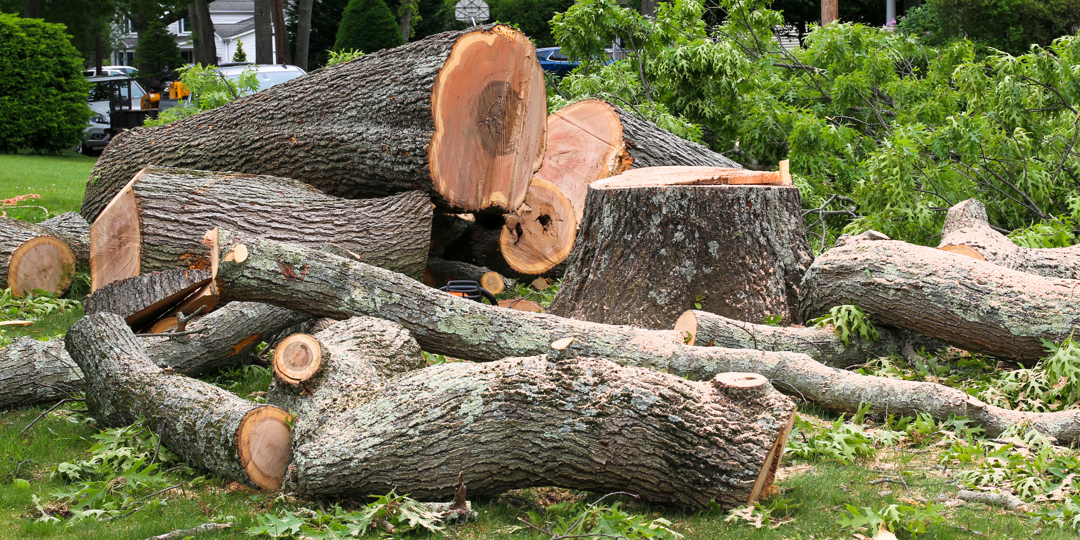
Emergency tree removal on the Texas Gulf Coast costs more than a planned takedown. Storm damage, after-hours labor, equipment staging, and liability all push the price up. A leaning oak over a Pasadena rooftop at 2 AM is not the same job as a healthy tree taken down in daylight. We break down what drives the cost so you can move fast without surprises. Monster Tree Service of Texas Gulf Coast responds 24/7 with a clear scope explained before any work begins.
Typical Emergency Tree Removal Cost Ranges in the Texas Gulf Coast
Emergency tree removal usually runs well above the price of a planned removal. Many jobs land at 1.5x to 2x the cost of the same tree on a scheduled day. After-hours dispatch, urgency, and risk all factor in.
Gulf Coast conditions push the variance even wider. Wet ground after a tropical storm slows equipment access. Water oaks fail in storm winds in ways other species do not. Storm-damaged trunks often cannot be climbed safely. Leaning trees over Friendswood ranch homes need rigging plans that take time to execute the right way.
A standard emergency quote covers the immediate hazard work. It may or may not include stump grinding, debris haul-off, and full site cleanup. Always ask what the quote covers before you compare numbers between providers. The lowest first-call number rarely tells the full story.
Why Emergency Removal Costs More Than Planned Removal
Emergency work carries a labor premium. Crews are pulled outside their scheduled day. After-hours and overnight dispatch add cost on every job. A tree on a structure cannot wait for next Tuesday.
Hazard premium is the next factor. A fallen-on-roof removal moves slower than a yard takedown. Sections must be lifted clear instead of dropped. Rigging takes longer when the goal is to prevent more damage. Time pressure also raises the price. Insurance adjusters need access. Driveways need clearing. Crews must prevent water damage and shifting limbs while the work moves forward.
Crew availability is the final factor. Hurricane season runs June 1 through November on the Gulf Coast. Demand spikes hard after major events. The Storm Surge Priority List puts existing customers at the front of the queue when call volume overwhelms standard scheduling. Equipment staging is another piece. Cranes, lighting systems, and tracked machines for soft ground all have to be moved into place before the first cut.
Equipment & Crew Costs Under Storm Conditions
Equipment is often the largest single line on an emergency quote. Not every job needs a crane. A cleanly fallen tree in an open yard can be handled with chainsaws and ground rigging. The math changes fast when a structure is involved.
Cranes lift sections clear of homes when dropping is not an option. Bucket trucks reach high limbs over coastal lots where lot lines run tight. Tracked machines work soft Gulf Coast soil after heavy rain. Night-lighting setups make overnight work safe. Each piece of equipment carries its own staging time and cost.
Labor pricing reflects what the work demands. At Monster Tree Service of Texas Gulf Coast, climbers, rigging specialists, and ground crew are a big part of what you pay for. Storm-damaged trunks are often unstable. Dead trees with internal decay cannot be climbed the same way a healthy tree can. Hazardous conditions slow the work and raise the labor demand. Existing customers on the Storm Surge Priority List benefit here too. Their jobs are not waiting in queue behind cold-call work.
Insurance, Liability & What's on Your Tab
Home insurance usually covers emergency tree removal when a covered peril knocks a tree onto a covered structure. A storm-felled tree on your roof usually qualifies. A healthy tree taken down on purpose does not. Some policies cover fence damage. Others exclude it. Check with your insurance company before you assume coverage applies.
What you pay out of pocket depends on the policy and the scope. A deductible applies. Trees that fall on bare ground are usually the homeowner's job to pay for. Debris cleanup after a covered claim sometimes has its own sub-limit. Reading the policy before a storm hits saves real money after one.
Verifying the contractor's insurance matters as much as your own. Workers' compensation and commercial general liability protect you if anyone is hurt on your property or if equipment damages something. Monster Tree Service of Texas Gulf Coast is licensed and insured. A Certificate of Insurance is available on written request before work begins. Walking the property with the crew and confirming scope up front is part of every job.
The Storm Surge Priority List: Existing Customer Advantage
The Storm Surge Priority List is built for Gulf Coast realities. After a major storm, demand spikes faster than any tree service can scale. Cold-call jobs wait days, sometimes longer. Existing customers do not.
Existing customers on the Storm Surge Priority List get priority emergency scheduling after major storm events. In coastal areas where storm calls flood the system within hours, that priority carries real value. The same is true in Baytown after industrial-corridor storms and in League City after inland flooding.
Pre-storm preparation is how a property earns the priority. A single trimming visit, a tree health check, or a routine removal places the customer on the list. The work pays off twice. First as the visit itself. Second as faster response when the next storm rolls through. Storm Surge Priority is not a marketing label. It is how the schedule actually runs after a Gulf Coast event. For more on protecting trees before storms hit, see our breakdown of Tree Health Care & Disease Treatment Cost for Texas Gulf Coast.
What to Ask When Comparing Emergency Tree Removal Quotes
The lowest first-call number rarely captures the full job. Sharper questions up front mean fewer surprises at the end.
When comparing emergency providers, ask:
What does the quote include? Does it cover stump grinding, debris haul-off, and full site cleanup?
Does the crew carry liability insurance and workers' compensation?
Is a Certificate of Insurance available before work begins?
What is the realistic response time given current storm-call volume?
How will the crew handle complications like utility-line proximity, structural shoring, or secondary damage?
Will pricing change if the job is more complex than the initial estimate, and how is that authorized?
Sharper questions up front lead to fewer surprises at the end.
Get an Emergency Response from Monster Tree Service of Texas Gulf Coast
Emergency tree removal cost makes more sense when scope, equipment, and liability are explained from the start. Contact Monster Tree Service of Texas Gulf Coast for a 24/7 emergency response and a clear scope explained before any work begins. Call (281) 784-3368 to reach the dispatch team. Backed by a 4.9-star Google rating, Open 24 Hours, and the Storm Surge Priority List. A Certificate of Insurance is available on written request. Learn more about our emergency tree removal service.
Emergency Tree Removal Cost FAQs
Does insurance cover emergency tree removal in the Texas Gulf Coast?
Home insurance usually covers emergency tree removal when a tree falls on a covered structure during a covered peril like a storm. Coverage varies by carrier. Fence-only damage and trees that fall on bare ground are often excluded. Proactive removal of healthy trees is usually not covered. A deductible applies, and some policies cap debris removal. Check the policy before you assume coverage, and verify the contractor's Certificate of Insurance before work starts.
How quickly can Monster Tree Service respond after a storm in Baytown or Seabrook?
Monster Tree Service of Texas Gulf Coast operates 24/7 dispatch. Real response windows depend on storm-call volume in the moment. Existing customers on the Storm Surge Priority List get scheduling priority after major events. Call (281) 784-3368 to reach the dispatch team.
Why does emergency tree removal cost more than planned removal?
Emergency tree removals carry a 1.5x to 2x cost premium over planned takedowns. After-hours dispatch, hazard premium, time pressure, and equipment staging all push the price up. Crews work slower around structures and unstable trunks. A free onsite evaluation locks the scope before work begins.
What counts as a tree emergency on the Texas Gulf Coast?
A tree emergency is a tree on a structure, leaning over a structure, blocking access, or touching a utility line. Hurricane and tropical-storm aftermath drives most emergency calls between June and November. When a tree poses an immediate hazard to people or property, treat it as an emergency and call.
Do I need a permit to remove a storm-damaged tree in Houston?
City-of-Houston residential trees on private property usually do not require a permit for removal. HOA approvals and protected-tree ordinances apply in some communities. League City has a clearance ordinance for overhanging trees. The crew confirms permit and ordinance issues before work begins. Call for clarification on your specific lot.