
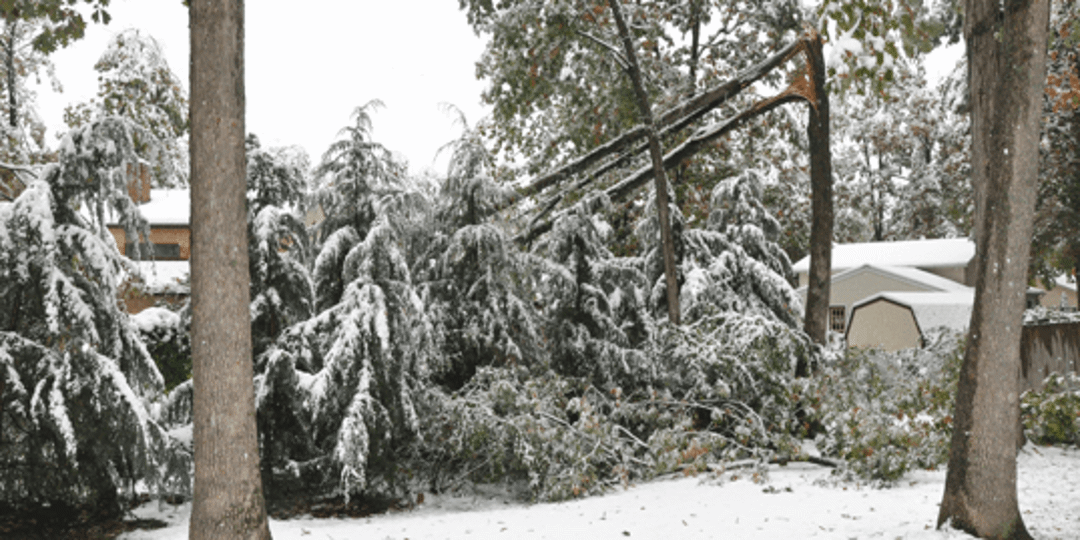
Minnesota winters are unpredictable. Heavy snow, sudden ice storms, strong winds, and extreme temperature swings can all create dangerous conditions for trees. What looks like a quiet winter landscape can quickly turn hazardous when branches crack under weight, trunks split in bitter cold, or entire trees tip after a thaw-and-freeze cycle. Understanding why winter tree emergencies happen and knowing how to respond can protect both your property and your safety.
Most winter emergencies start with one simple factor: weight. Snow and ice collect faster than most people realize, especially during storms where the temperature hovers near freezing. Wet, heavy snow can double or triple the load on branches. When that weight is combined with high winds, even healthy trees can experience sudden breakage. Evergreens are especially vulnerable because their needles hold snow instead of letting it fall through the canopy.
Rapid temperature fluctuations also play a major role. Minnesota is known for bitter cold followed by unexpected thaws. These swings cause expansion and contraction within the wood, which can create stress cracks in trunks and large branches. Once a crack forms, even a small amount of additional weight can cause a break. Trees that were damaged earlier in the year are even more susceptible, and the weakness often becomes visible only after a storm.
Root issues can contribute as well. When the ground freezes and thaws repeatedly, root systems may lose stability. A tree that appears solid in January can begin to lean after a midwinter warm-up, especially if the soil becomes saturated before freezing again. This is a common cause of uprooting during late-winter storms.
Because winter damage often happens suddenly, homeowners can feel unprepared when a tree becomes a hazard. Being aware of the warning signs helps you act quickly.
Common signs of winter tree emergencies include:
• Branches that bend unusually low or fail to spring back after shedding snow
• Cracking or popping sounds from the canopy during storms
• Sudden leaning of a tree that previously stood straight
• Branches that split, hang, or rest on roofs, vehicles, or power lines
• Fresh cracks running vertically along the trunk
• Uprooting or exposed roots after a thaw
If you notice any of these issues, safety should be the first priority. Winter storm damage can be unpredictable, and weakened branches may still fall hours or days after the storm passes. Avoid standing beneath damaged limbs or attempting to remove broken sections on your own. Snow and ice make ladders unstable, and hidden cracks can cause branches to shift without warning.
The best step is to contact a certified arborist who provides emergency winter services. A trained professional can assess the situation, remove hazards safely, and help stabilize trees when possible. They can also determine whether the damage is repairable or if a full removal is the safest choice.
Preventive care during the fall and early winter can reduce the risk of emergencies, but even well-maintained trees can suffer in harsh Minnesota weather. When winter does cause unexpected tree damage, quick action and professional support are the most effective ways to protect your home, your yard, and your peace of mind.
If you are unsure about the health or safety of any tree on your property, our local team is here to help. Schedule a free assessment and let a local, Minnesota-based certified arborist walk you through what is happening, what it means, and the best next steps to keep your home and yard protected.