
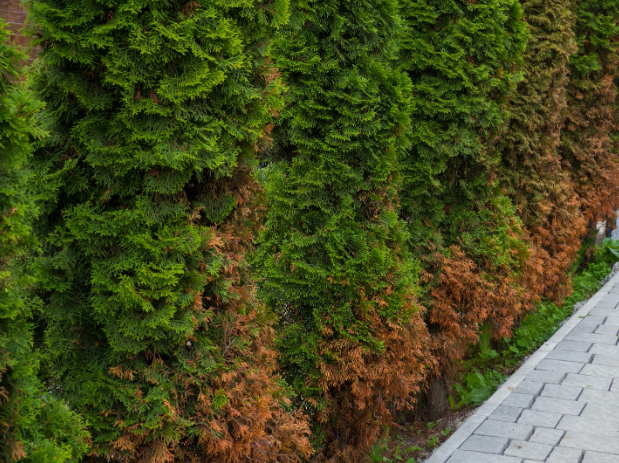
Evergreen trees and shrubs are essential elements in landscaping, offering structure, appealing texture, and vibrant foliage that lasts throughout the year. Due to their persistent year-round color, browning and dieback can be especially noticeable - and alarming – particularly since in many cases, damage can spread quickly, rapidly overwhelming trees and shrubs, and potentially threatening their survival.
This article will explore the ways that diseases and other disorders which cause browning and discoloration develop in evergreens and provide practical advice to help treat and prevent these issues - ensuring that these valuable plantings remain healthy and attractive for many seasons and years to come.
The Best Treatment Starts with Tree Identification
Correctly identifying and understanding the specific characteristics of any tree is essential before addressing its health concerns – as proper identification forms the foundation for accurately diagnosing and managing a disease or other health issue.1 So, the first step in diagnosing a potential health problem is recognizing the type of tree that is being affected.
Once you have accurately identified your tree, you can look up its common diseases and pests, as well as identify some of its unique needs and vulnerabilities. This information can be especially helpful for diagnosis and developing an effective health management plan.
What Defines an Evergreen: Broadleaf or Conifer?
For identification purposes, what essentially defines an evergreen is the persistence of its living foliage throughout the year. Unlike deciduous trees that lose their leaves in fall and winter, evergreens keep their foliage and consistent color throughout the seasons.
Beyond that classification, there are two main types of evergreens: broadleaf and coniferous. Understanding whether a tree is a broadleaf or a conifer is important to understand its physiology and narrow down its species' identification. Broadleaf evergreens - such as hollies, boxwoods, Southern magnolias, Schip laurels, and rhododendrons - have broader leaves much like deciduous trees, except that they stay on the tree and remain green all year.
Conifer evergreens, on the other hand, are typically recognized by their needle-like foliage and their ability to generate cones. In fact, the origin of the word "conifer" itself highlights this unique trait, distinguishing their classification from other types of trees.2 Many conifer species are popular and widely used for landscaping - including pines, spruces, firs, junipers, hemlocks, yews, cypresses, and arborvitae.
Common Symptoms and Patterns of Evergreen Health Issues
The next step in diagnosing a problem is identifying symptoms and noticing patterns of discoloration and damage. In evergreens some of the most common signs of trouble include:
- Browning, yellowing, or unusual discoloration of needles or leaves
- Premature leaf or needle drop
- Branch dieback
- Oozing sap
- Cankers, holes, or lesions on leaves, needles, or the bark of trunks and branches
Damage may be localized to one area or be universally dispersed throughout the tree – or it may be spreading to other trees of the same type.
Symptoms may also progress in different directions within the tree. For instance, browning may start at the tips of branches versus an upward or outward spread that starts at the bottom or interior of the tree.
Noticing these patterns is important for diagnosis, as damage progression will vary depending on the species of tree and type of pathogen or agent causing damage.
Diagnosing Direct Causes
After correctly identifying the tree and determining the patterns of damage, arriving at an accurate diagnosis becomes more straightforward. Pairing a distinct progression of damage with an individual tree makes it easier to pinpoint an accurate causal agent.
Typically, these direct causes are grouped into three categories:
- Disease pathogens: These are organisms such as fungi, bacteria, viruses, or nematodes that invade plant tissues and disrupt normal function.
- Pest issues: Various pests, including insects, mites, or animals, can damage evergreens by feeding on foliage, sap, or bark.
- Abiotic factors: Non-living environmental agents, such as dehydration caused by drought, suffocation from waterlogged soil, or toxic exposure to salt and herbicides, can also directly contribute to evergreen damage.
Early Detection is Key
Once established, pest and disease symptoms can progress quickly, frequently resulting in damage that is impossible to reverse. The most effective treatment options usually occur with early detection – making regular monitoring critical to stop damage before it overtakes the tree.
Looking at Environmental Factors
Beyond making an accurate diagnosis, starting a successful treatment plan involves looking at surrounding environmental factors that are likely to promote or spread a health issue.
Most disease and pest problems are usually accompanied by environmental conditions that either encourage or worsen occurring damage. Tree health issues are rarely the result of a single factor – and for the majority of diseases, simply having the pathogen or other agent present is not enough for an issue to occur.
Generally, disease development requires three elements:
- the presence of a specific pathogen
- a susceptible host plant or tree
- and environmental conditions favorable for disease
Arborists call the combination of these three factors a “disease triangle”3- and employ control strategies based on removing or altering at least one of these factors to stop the spread of disease symptoms.
Of the three, often the most practical and straightforward approach is changing the cultural environment where the tree is growing - if it is a factor contributing to the tree’s health issues.
Correcting Common Cultural Conditions
Fortunately, with some thought and planning, many cultural practices can easily alter environmental conditions that may be contributing to common health issues in evergreens. Addressing these factors by changing or avoiding these conditions can significantly reduce the risk of health disorders and their resulting damage.
Some of the most common cultural issues that affect evergreens are:
- Soil compaction and poor soil health: Compacted soil restricts root growth and limits water and nutrient absorption, making trees more vulnerable to environmental stress and disease.
- Poor soil drainage: Soils that frequently flood in low lying areas or fail to drain water can easily invite root rot and other health issues that commonly occur with many evergreens.
- Insufficient irrigation: Especially during summer drought periods, evergreens and other trees require consistent watering. Drip irrigation systems are ideal that target root systems with slow and deep - but relatively infrequent - waterings that occur no more than 2-3 times a week.
- Watering foliage directly: Watering the leaves and tree trunks rather than the root zone can increase the risk of fungal diseases and other issues affecting evergreen health. Minimizing overhead irrigation can help limit the spread of these pathogens and protect your evergreens.
- Improper planting: Planting too deeply can hamper tree development and increase susceptibility to stress and disease.
- Inappropriate location (Wrong Tree, Wrong Place): Planting a tree in a location that is inappropriate to meet its growing requirements - for instance an area with inadequate sunlight - can cause significant stress that may promote pests and disease issues.
- Improper pruning: For many evergreen trees and shrubs, blunt shearing encourages dense growth that blocks light and air penetration, whereas selectively thinning and reducing branches can enhance light and airflow, lowering disease risk.
- Landscape fabric: Weed barrier fabric that is wrapped around trunks can girdle trees, damage bark and interfere with vascular function - and its woven openings can fill with debris, blocking water and air from reaching the soil and roots.
- Insufficient mulch: Organic mulch helps conserve moisture, adds organic matter, and protects soil and roots from extreme temperatures. Putting down 2-3 inches of mulch that extends to a tree’s dripline will greatly increase these health benefits.
- Planting trees too close together: Crowding reduces light and air circulation, increasing the likelihood of disease and stress in evergreens.
- Overfertilization: Applying excessive fertilizer can burn roots or trigger unnatural growth flushes, which are often susceptible to diseases and pest infestations.
Chemical Treatment Options
While adjusting cultural practices can significantly reduce the risk of disease in evergreens, there are situations where making environmental changes are either impractical or are not enough to control existing problems.
For instance, uncontrollable swings in weather - such as prolonged periods of rain interspersed with spells of extended drought, high heat, and humidity - are especially stressful for many evergreen trees and provide optimal conditions for the spread of fungal pathogens. These circumstances often make disease issues unavoidable. In such cases, when used judiciously, timely intervention with appropriate pesticides can significantly help safeguard the health of evergreens.
It is worth noting that pesticide applications generally cannot reverse browning, remove lesions, or otherwise undo damage to foliage that has already occurred. Therefore, chemical control products generally are used most effectively by playing a preventative role in stopping the progression of the disease and curbing future outbreaks.
Choose the Right Product
When choosing a chemical treatment, it is extremely important to follow product label instructions and apply the proper product that is listed as appropriate and effective for the targeted issue. For instance, unless specifically listed, a systemic fungicide product likely would not have a productive effect to control a spider mite outbreak.Making treatments based on a general guess without a specific diagnosis likely will have no desired effect to stop the issue and may pose environmental harm.
Product labels should also be checked for any indications of plant toxicity that may result from application. It is important to note any limitations on the outdoor conditions that are present when a product can be applied – such as during high winds or extreme outdoor temperatures – in order to avoid risk of plant injury or environmental harm.
For these reasons it is advisable to rely on the expertise of a Certified Arborist or qualified plant health care professional to choose the most effective and safest application options to target pest and disease outbreaks.
The Lasting Impact of Integrative Holistic Care
In the long term, relying on chemical treatments alone may not be a sustainable option, unless the overall health of the tree is supported as much as possible. Therefore, to be most effective, any chemical treatment plan ideally should be integrated with holistic care that pays attention to the underlying health needs of the tree, supporting its own resilience and long-term vitality.
Monster Tree Service's Tree and Shrub Health Care Program Employs Comprehensive Care
Monster Tree Service employs a comprehensive, holistic strategy to effectively manage and treat diseases and disorders in evergreens and other trees. With our Tree and Shrub Health Care Program, our expert arborists and plant health care professionals take evergreen care to the next level – not just treating pests and diseases but supporting the health care needs of the entire tree – making your evergreen trees and landscape more resilient and vitally robust to ward off future issues.
Our approach combines the use of the most effective science-backed treatments with a deep understanding of the underlying causes and environmental factors that contribute to tree health issues – maintaining a sustainable focus that meets the long-term needs of every tree to ensure its continued vitality and resilience.
Tackling evergreen health issues takes a Monster. Call your local Monster Tree Service today – and schedule a consultation with one of our expert arborists to arrange a customized Tree and Shrub Health Care Plan for your evergreen trees and landscape!