
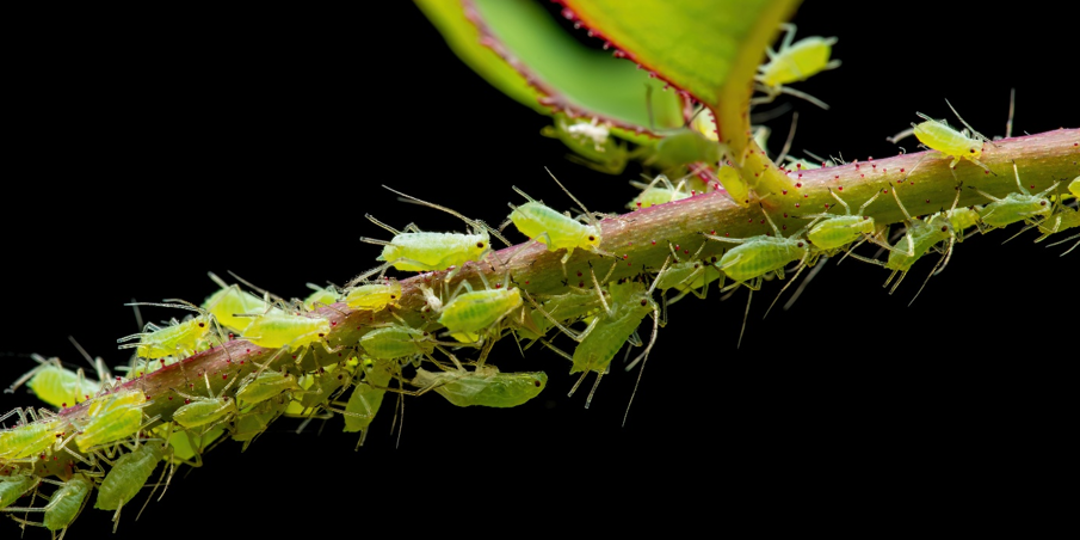
Aphids are small, but often overwhelmingly numerous pest insects that can quickly threaten the health of trees and landscapes - and they can be a persistent nuisance in your yard. Their rapid reproduction and sap feeding habits make them an ongoing and frequently messy problem for home and property owners. Especially in tall trees and dense landscapes aphids can be difficult to manage.
Understanding how aphids operate and the challenges they present is the first step toward effective control. In this article you will learn about the aphid’s life cycle and effective management strategies, so you can maintain the health of your trees and protect the beauty of your landscape.
Appearance of Aphid Insects
Aphids are tiny, pear-shaped insects, often measuring less than 1/8 inch in length. Their bodies are soft and can be many colors, including green, yellow, black, brown, red, white, or orange, depending on the aphid species. Some aphid species secrete a threadlike waxy covering, giving them a woolly appearance.1 Aphids can also be identified by two distinctive cornicles, or tube-like structures, protruding from their hind end, which help distinguish them from other garden insects.2
The life stages of aphids include eggs, nymphs, and adults. The nymphs and adults look similar in shape, except that the adults often look bigger in size and sometimes have wings that allow them to migrate to new plants and trees.3
Aphids feed on the sap of trees and other plants by piercing leaves and softer stems and sucking on plant fluids. They typically gather in clusters on the undersides of leaves, making them difficult to spot until their numbers swell. Scheduling regular inspections of your trees and shrubs can help you catch an infestation early, before significant damage occurs.
Aphid Symptoms and Damage
Aphid damage can be identified through several visible symptoms on trees and plants. Leaves may appear wilted, curled, yellowed, or distorted due to the insects’ feeding which robs a tree of fluids and nutrients. They are especially attracted to newer tender growth, and may be found along stems, or underneath leaves.
Aphids are also significant vectors of plant diseases, capable of transmitting viruses through their saliva from one infected tree or plant to other healthy plants.4
These pests not only weaken trees by draining essential nutrients but also leave behind a sticky sugary residue called honeydew, which attracts other unwanted insects, such as ants and wasps. The honeydew that aphids produce frequently leads to the growth of a black fungus called sooty mold which can be a messy nuisance for trees and surrounding property - blackening the tree and any nearby objects, including pavements, patio furniture and other shrubs and plants.5
Sooty mold covering tree leaves can interfere with the absorption of light and photosynthesis, depriving a tree of energy and causing additional stress.6 Over time, with these combined factors, rampant aphid infestations may cause stunted growth and reduced vigor, making early recognition and control essential for maintaining the health and vitality of trees and shrubs.
Born with Babies: An Aphid’s Extreme Reproductive Capability
Aphids are well known, if not infamous, for their extremely rapid ability to reproduce. Under optimal conditions (theoretically uninterrupted by predators or environmental factors), it’s been estimated that a single aphid can produce 600 billion descendants in one season.7
After hatching, female insects bear live young that within just a few days can continually reproduce without a male partner. Their babies are born pregnant, and in what is known as the “telescoping effect,” those babies are already carrying embryos that are additionally carrying a future generation.8
This extraordinary reproductive advantage allows aphid populations to explode seemingly overnight, making them one of the most challenging pests to control. Because their generations overlap and develop so quickly, infestations can become overwhelmingly severe before you even notice their presence.
Environmental Stress Factors Contributing to Aphid Infestations
There are a number of environmental factors that are common in many backyards and landscapes that strongly promote issues with aphids.
- Heat and drought: Extended periods of high temperatures and limited rainfall can place significant stress on trees and shrubs. Such environmental conditions weaken plants, making them more susceptible to aphid attacks. Aphids thrive when plants are stressed, as weakened defenses make it easier for infestations to establish and grow.9
- Stress caused by soil compaction: Soil compaction reduces the movement of air and water to plant roots. This restriction can reduce a tree’s tolerance to common stress factors, creating ideal stress conditions for aphids to multiply.10
- High Nitrogen fertilizers promote excessive succulent growth that attracts aphids: Applying fertilizers with a high nitrogen content can stimulate rapid, lush growth in plants and trees. This tender growth is highly attractive to aphids, providing them with an abundant food source and can inadvertently increase the likelihood and severity of aphid infestations.11
Monster’s Comprehensive Tree and Shrub Health Care Offers Long-term Effective Aphid Control
Regular Monitoring
Early detection and prompt intervention are key to preventing aphid infestations and widespread damage. Monster’s yearly Tree and Shrub Health Care Program includes regular monitoring visits from our expert arborists and tree care professionals, ensuring that your trees and plants are inspected regularly for signs of aphids. Early detection is critical to address an aphid problem before it escalates and impacts the overall health of your yard.
Supportive Care
Maintaining the health and vigor of trees and shrubs is essential for preventing aphid infestations. When plants are thriving and not experiencing environmental stress, aphids are less likely to become a problem, and natural predators such as lady beetles and lacewings can effectively keep their populations under control.12
Addressing common stress factors is key to reducing aphid susceptibility. Monster’s Tree and Shrub Health Care Program is designed to tackle these core issues, helping to create a favorable environment for trees and shrubs that minimizes stress and hinders aphid development.
Getting to the Root of Aphid Problems with Soil Health Care
Common soil stress factors - such as drought, compacted soil, and nutrient imbalances – frequently attract aphids and other pests, but these issues can be effectively addressed with Monster’s Soil Health Program. This program works in multiple ways that effectively combat stress factors that may promote aphid development by:
- Rebuilding soil structure to allow better infiltration of water and air so your tree can breathe and receive the water it needs.
- Restoring biology to provide your trees and shrubs the nutrients they need naturally without over applying fertilizers that may actually attract aphids and make problems worse.
- Supplementing additional moisture through a soil additive that draws humidity from the air and converts it into available water for tree and plant roots.
Monster’s Aphid Treatments Offer a Range of Control Options
Once established, controlling aphids can be tough. Monster Tree Service has a range of the latest science proven treatment options that effectively target all stages of threatening aphid populations.
For ongoing protection, our Monthly Maintenance Foliar Program employs organically labeled products in a rotating schedule, effectively preventing and controlling aphids and other common foliar pests and diseases. In severe cases, especially involving large trees, Monster Tree Service also offers systemic treatment options to halt extensive damage from aphid attacks.
Combined with supportive care, these proven control treatments target aphids directly and help more severely affected trees and shrubs redirect their energy to ward off attacks, making treatments more effective. This comprehensive approach eliminates the pest, addresses underlying health issues, and supports the vitality of your landscape year after year.
Call on Monster Tree Service for Professional Aphid Control
When aphid infestations threaten the health and beauty of your trees and shrubs, turn to Monster Tree Service for expert intervention. Our qualified team is equipped to address the most severe aphid issues with a comprehensive science-backed approach that prioritizes tree health and long-term pest resistance.
Now is the time to stop aphids from getting the upper hand on your trees and landscape. Call your local Monster Tree Service today!