
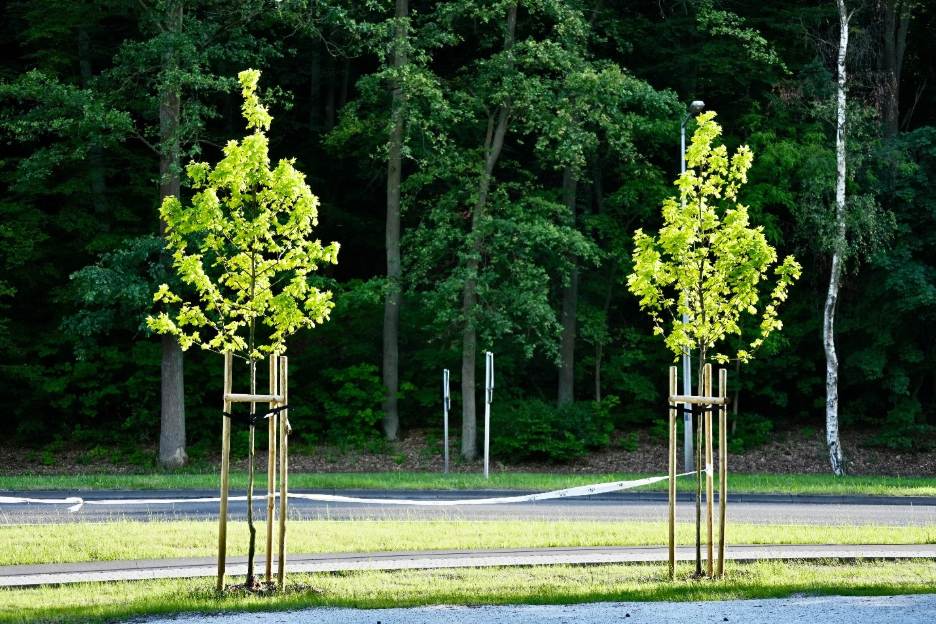
Summer heat waves and extended dry periods can put serious stress on trees in suburban landscapes and residential neighborhoods. Newly planted trees are especially vulnerable to drought stress, heat injury, and even death during extreme summer conditions.
This article explains why hot, dry weather is so hard on recently transplanted trees and outlines practical steps – along with some extra TLC measures – that homeowners can take to reduce stress, support recovery, and help new trees establish to become healthy and beautiful additions in their landscapes.
Why Water and Healthy Roots Matter
Water is essential to nearly every function that keeps a tree healthy and alive. Trees use water during photosynthesis to produce energy for growth, defense, and repair. Water also helps move nutrients throughout the tree, supports leaf structure, and allows trees to cool their leaves through transpiration, the process of releasing water vapor during warm weather.1
To access that water, a tree depends on its root system. Established trees often have roots that extend to the dripline and may spread well beyond it2, giving them access to a larger volume of soil for moisture, oxygen, and nutrients.
When newly installed, however, most nursery grown trees begin with much more limited root systems. Balled-and-burlapped trees can lose a large portion of their original roots when they are dug from the nursery field3, while container-grown trees have roots confined to the limited volume of their containers. Because of this reduced root system, newly planted trees often need extra support - especially consistent, deep watering - while they establish in the landscape.
From Nursery to Landscape: Helping Trees Adjust
Water is critical for newly planted trees, but it is only one part of successful establishment. A tree’s ability to adjust after planting also depends on soil conditions, root health, planting site challenges, and the level of care it receives during its first growing seasons.
In a nursery, trees are typically grown with regular irrigation and close attention to pests, diseases, nutrition, and environmental stress. Once moved into a residential or commercial landscape, that controlled environment changes quickly4.
After transplanting, a new tree may face compacted soil, limited root space, intense sun exposure, reflected heat from nearby buildings and pavement, inconsistent watering, and pressure from pests or diseases. When summer heat and drought are added to these challenges, stress can intensify quickly, making it harder for the tree to establish, grow, and defend itself. The good news is that thoughtful follow-up care can make a meaningful difference.
Practical Steps to Help Newly Planted Trees Thrive
Newly planted trees need extra care while they adjust to their new environment, but a few consistent practices can have a powerful impact on their future health and survival. By improving soil conditions, watering correctly, conserving moisture, and reducing added stress, homeowners can help young trees recover from transplant stress and establish stronger root systems.
Address Soil Health Issues
Healthy soil is one of the most important foundations for helping newly planted trees recover from transplant stress and withstand summer heat. While water is essential during establishment, soil conditions determine how effectively that water moves into the ground, reaches the root zone, and remains available to the tree. If soil is compacted, depleted, or poorly structured, even frequent watering may not provide the support a new tree needs.
This is especially common around new construction, where soil is often compacted by equipment and stripped of the organic matter that supports healthy root growth. In these conditions, roots may struggle to access air, water, and nutrients, making it harder for a newly planted tree to establish, recover, and grow into the surrounding landscape.
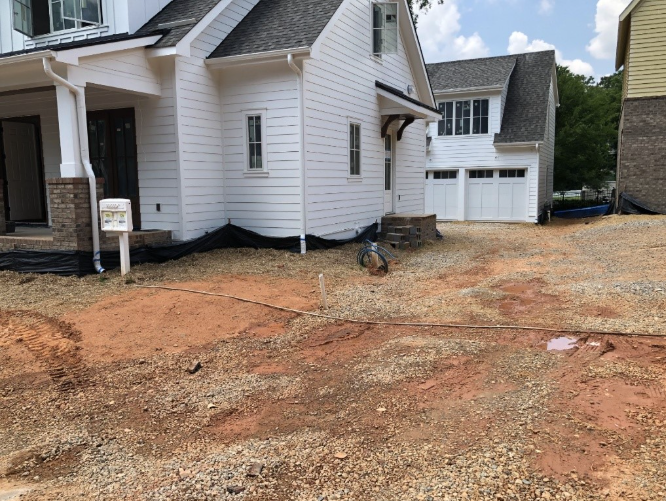
Photo: Nancy Gaspari
Soils around new construction sites are often compacted and depleted of organic matter, creating a difficult environment for newly planted trees to establish healthy roots and access water.
Avoid Fertilizing Water Stressed Trees
Fertilizer applications can stimulate new growth, which increases the tree’s demand for water at the exact time moisture is limited. Synthetic fertilizers also contain salts that draw moisture away from roots, adding further dehydration stress during drought conditions5.
Instead, focus on improving the soil environment around the root zone6. By incorporating organic matter and stimulating soil biology, Monster’s Soil Health Program can help improve soil structure, increasing moisture availability and supporting stronger root development so newly planted trees have a better chance to establish successfully.
Monster’s Soil Health Care treatment formulas also include materials that help draw humidity from the air and make additional moisture available in the soil, providing added support during hot, dry weather.
Tips for Watering
Watering newly planted trees is not just about how often you turn on the hose - it is about getting moisture to the right place, at the right depth, and at the right time. During summer heat and dry weather, consistent watering helps reduce transplant stress, protect fine absorbing roots, and encourage new roots to grow into the surrounding soil. The following tips explain how to water deeply, use helpful watering tools, monitor soil moisture, and continue support until the tree is well established.
Water Slowly, Deeply, and Directly at the Root Zone
Newly planted trees need consistent moisture while their root systems recover and begin growing into the surrounding soil. The goal is to water deeply enough to reach the root zone - usually about 12 inches below the surface7 - rather than applying small amounts of water that only wet the top layer of soil.
Slow, deep watering is generally better than quick, frequent watering because it encourages roots to grow downward and penetrate deeper into soil. This deeper root growth helps the tree become more resilient during future periods of summer heat and dry weather. A slow soak also gives water time to move through the soil profile instead of running off or evaporating quickly. For best results, water in the very early morning or in the evening after the hottest part of the day has passed.
Whenever possible, avoid wetting the leaves or bark. Overhead watering provides little benefit to the tree and can create conditions that encourage fungal disease. Instead, apply water to the soil beginning near the edge of the root ball and extending outward toward the dripline to support healthy, outward root growth.
Use Watering Devices to Deliver a Slow, Even Soak
Watering aids such as slow-release watering bags, soaker hoses, drip emitters, and similar devices can help deliver water gradually and evenly to the root zone. These tools are especially helpful during hot, dry stretches because they reduce runoff and give water time to soak into the soil where roots can use it.
Check watering devices regularly to make sure they are filled, positioned correctly, and functioning as intended. In times when rainfall is frequent or soil becomes saturated, remove or turn off these devices temporarily to prevent waterlogged soil, which can also stress newly planted trees.
Avoid relying on overhead sprinklers for tree establishment. Sprinklers often wet leaves and bark more than the root zone, which can encourage disease issues and may not provide the slow, deep soaking needed for healthy root development.
Monitor Soil Moisture Before You Water
Regularly checking soil moisture helps ensure the soil stays moist - not saturated - and that water is reaching both the root ball and the surrounding soil. This simple step can help prevent the two most common watering problems for newly planted trees: watering too little or watering too often.
To check moisture, push a long-handled screwdriver into the soil about 8 inches deep near the tree’s root zone8:
- If it slides in easily and leans or tilts, the soil may be too wet.
- If it goes in easily and stands upright, moisture levels are likely just right.
- If you can’t push it in easily, the soil is probably too dry.
Continue Supplemental Watering During Establishment
Newly planted trees need supplemental watering until their roots have grown far enough into the surrounding soil to support their canopy on their own. Larger trees generally take longer to establish than smaller trees, so their watering needs often continue for more than one growing season.
A helpful guideline is to provide about one year of supplemental watering for every inch of trunk caliper9, adjusting based on rainfall, soil type, temperature, exposure, and the tree’s overall condition. During hot, dry weather, continue checking soil moisture and water deeply when the root zone begins to dry.
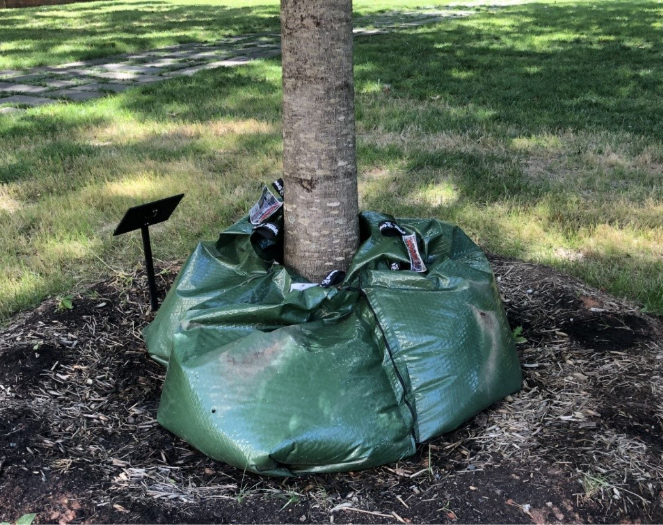
Photo: Nancy Gaspari
To establish well, this new tree will need about one year of supplemental watering for every inch of trunk caliper.
Mulch to Protect Roots and Conserve Moisture
Putting down organic mulch over the root zone of a new tree provides a multitude of benefits. Mulch helps newly planted trees by conserving soil moisture, moderating soil temperature, reducing weed competition, and protecting young roots from heat and drought stress. As organic mulch breaks down, it can also improve soil structure and contribute valuable organic matter.
Apply mulch in a broad, even ring over the root zone, extending it as far out to the dripline as possible - but keeping it a few inches away from the trunk. Avoid piling mulch against the bark at the base of the tree, because excess mulch around the trunk can hold moisture, encourage decay, and create hiding places for pests.
Need help? Call on Monster Tree Service for professional Soil Health Care that works to help trees survive and thrive through the tough demands of extreme summer heat.
Monster Tree Service’s Soil Health Program tackles heat and drought issues head on by taking a soil-first approach that supports tree health by focusing on the underground environment where tree roots grow. We address common landscape challenges such as soil compaction and limited moisture-holding capacity, utilizing holistic products that improve water movement and retention, support new root growth, and help trees become more resilient during hot, dry weather.
Your new trees are a precious investment, adding value, beauty, and multiple benefits to your property. Call us today to protect your trees from the threats of summer heat and keep them healthy and thriving for many years to come.