
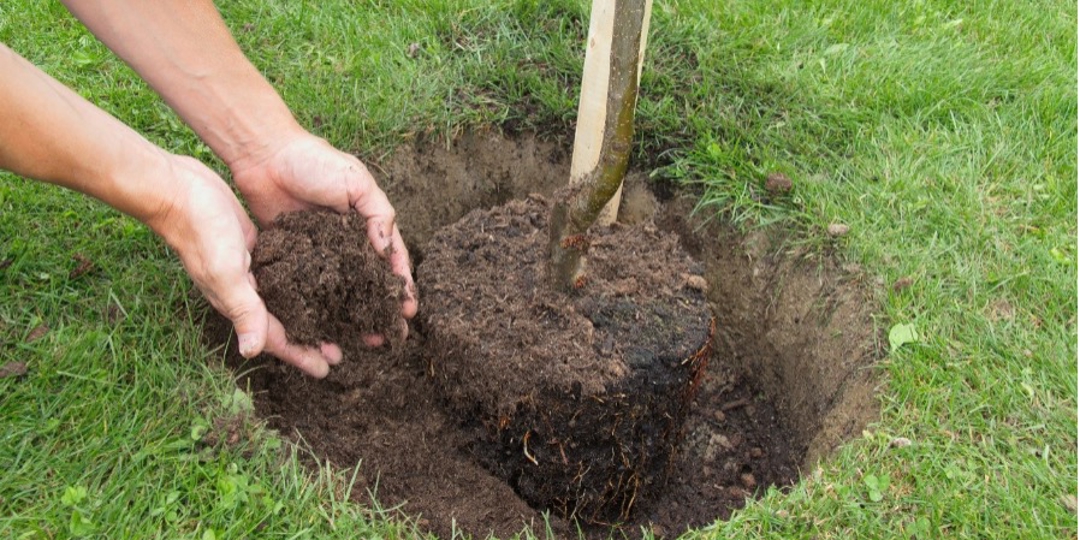
Planting a tree is a lasting and life affirming investment in the future. Trees not only beautify our landscapes - they also bring a long list of economic, environmental, human health and social benefits to both property owners and their communities.
To fully enjoy these benefits for many years into the future, a tree needs the right start; and understanding the best practices – or Do’s and Don’ts - of tree planting is essential for a new tree so that it can grow to live a long and healthy life.
In this article, we walk through the key points to consider when planting a tree, including 10 essential Do’s - and a few major Don’ts - so your planting project is more likely to succeed now and for many years to come.
1. Choose the Right Tree
Choosing to plant a tree is a long-term decision that may last a lifetime, if not for future generations. When established successfully, most trees grow far larger than they were at the time they were planted - both above and below the ground – and in time can outgrow their spaces, potentially creating conflicts with surrounding buildings and utilities. For this reason, it’s extremely important to be aware of a tree’s mature height and canopy spread - and remember that roots underground may spread for a considerable distance. 1
Many tree species also have other specific site requirements, including:
- Light requirements
- Moisture needs
- Tolerance of poor soil drainage conditions
- Tolerance of extreme temperatures
Before you buy your tree, thoroughly evaluate your planting site and research your options to select a species that is well suited to both the planting location and your local climate.
2. Call 811 and Check Your Local Regulations
Before you dig, take two very important steps to protect your safety and avoid costly damage:
- Call 811: Have underground utilities marked before you plant. This step is essential for personal safety and helps prevent damage to buried lines.
- Check local regulations: Many municipalities have ordinances that govern which trees are allowed and where they can be planted.
3. Plant at the Right Time
Trees establish best when planted in cool weather, which gives roots time to grow and expand while limiting exposure to heat and drought stress. The best times to plant are generally fall and spring, but optimal planting windows may vary by region, depending on the climate conditions in your area. 2
4. Dig a Hole with the Right Depth and Width
Planting a tree too deeply is a major cause of tree mortality and will likely cause future health issues. 3 Getting both the depth and the width of the hole right is critical for future success and gives your tree the best possible start.
For planting depth, it’s important to dig the hole no deeper than the root ball itself. To find the right depth follow these three steps:
- Locate and expose the root flare, which is the transitional area at the bottom of the trunk where the roots meet the base of the tree. Root flares are commonly buried with containerized and balled-and-burlapped trees and need to be uncovered prior to planting.
- Measure from the root flare to the bottom of the root ball.
- Dig the hole no deeper than this measurement.
Digging a planting hole to the proper width is also important. When considering planting width, remember that once a healthy tree is established, its roots typically extend well beyond its canopy. So, to give the tree its best chance to establish, it’s also important to dig the planting hole at least two to three times as wide as the root ball. This will loosen more of the surrounding soil, giving roots room to grow and spread outward.
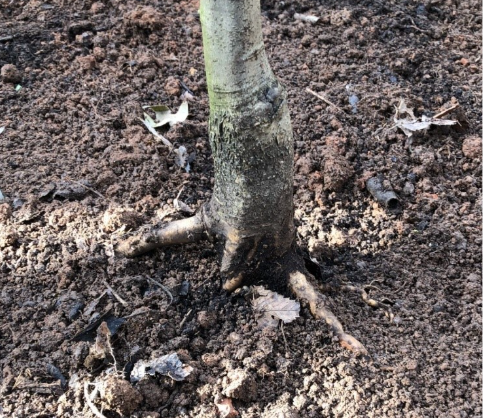
A newly planted tree with its root flare exposed. Note the dark area where the container’s potting medium had buried the flare. Photo: Nancy Gaspari
5. Remediate Soil Compaction and Soil Health Issues
Soils in residential and commercial areas are frequently degraded and compacted by building construction. During construction native topsoil is often removed, and construction backfill is usually stripped of the organic matter and soil biology that trees need to survive. 4
Monster’s Soil Health Care treatments are especially helpful for degraded and compacted soil conditions that are common to new building construction sites. With formulations specifically designed to restore the missing biological components that are necessary for soil health, our holistic Soil Health Program works naturally with soil biology to support your tree during the planting transition, helping it flourish for years to come.
6. Inspect Roots
Before putting a tree in the ground, it’s critically important to look for and prune out any circling, kinked, or bent roots that may grow around and strangle the tree.5
Containerized trees are especially likely to have roots that circle around the root ball or wrap around the tree. To sever circling and pot bound roots, you can either shave around the edge of the root ball or make 4-6 vertical slices into the root ball around its circumference to cut through them. 6
7. Prune Out Damaged and Conflicting Branches
Before a tree goes into the ground, inspect its branches and prune out any broken or damaged branches or conflicting limbs that cross and rub together. 7It’s best to do this before the tree goes into its planting hole, while it is still lying on the ground, as after it’s planted, some branches may be too high to reach.
8. Remove Extraneous Materials
It’s important to remove extraneous materials that were used by the nursery to support or transport trees. Once trees are put in the ground, these materials are generally no longer helpful andcan interfere with the tree’s growth and establishment. Here are some things to look for and remove:
- For balled-and-burlapped trees: The root balls of B-and-B trees are typically wrapped in burlap and encased in a wire basket, which is usually tied to the base of the tree with twine. Remove all of these materials as much as possible after the tree is set in its planting hole.
- For containerized trees: Remove the container before planting. Take off ties and any container staking materials, such as bamboo poles tied to the tree, to prevent constriction and damage to the trunk. Not all new trees need staking – but if the tree is unstable after planting, you can stake it on either side of its planting hole using flexible ties that give the tree some amount of sway and allow the trunk to grow and expand safely. 8
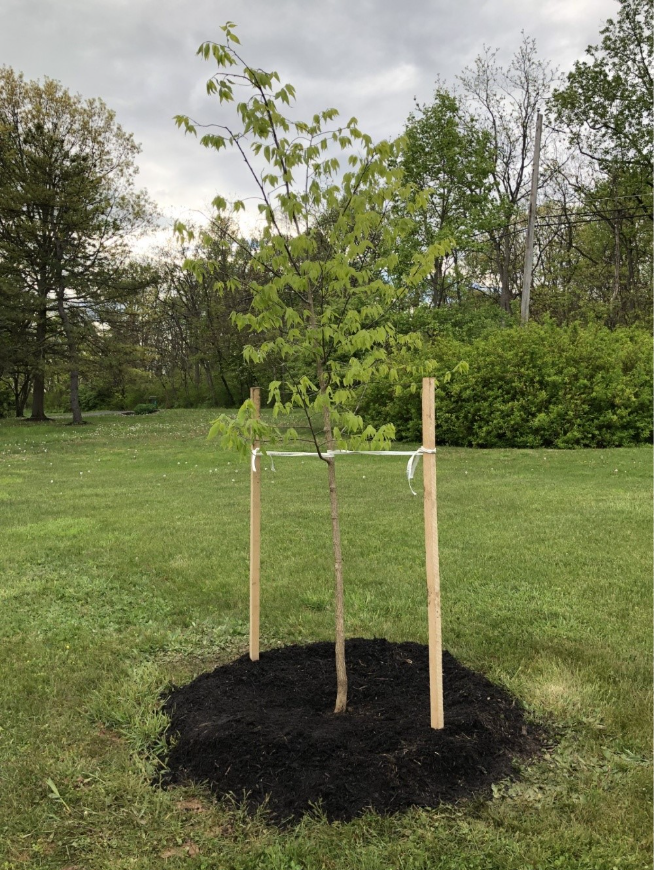
A new tree with correctly installed ties and stakes for support. Ties should be flexible and allow some degree of sway to allow the trunk to grow and strengthen. Photo: Nancy Gaspari
9. Water Frequently and Adequately
Adequate watering has been shown to be one of the most critical factors for a tree’s survival and future health after planting.9 To make sure your tree receives enough water, especially in the first few years, follow these general guidelines:
- How long: Continue watering for one year for every inch of trunk width.
- How much: At each watering, give the tree about 2 gallons of water for every inch of trunk caliper. 10 In general, less frequent but deep, slow waterings are preferable to short, shallow watering.
- How often: Water at regular intervals throughout the week as needed to keep the soil consistently moist – but not waterlogged.
- If you are using an irrigation bag or mat: Make sure the bag is filled and the mat is recharged – especially during dry periods - so that the tree is consistently receiving moisture.
- Monster’s Soil Health Care can help: Our Soil Health Care treatments contain an additive that draws humidity from the air and converts it into soil moisture that can help supplement water needed by newly planted trees.
10. Mulch Around the Base
Organic mulch materials – such as hardwood mulch, woodchips, pine straw, and leaf mulch – offer many health benefits for trees. Mulch helps:
- Retain moisture
- Moderate soil temperatures, protecting roots from extreme cold and heat
- Add organic matter that promotes soil health
- Suppress weeds
- Give the tree a tidy, attractive appearance
When mulching a tree, going wider is better than going deep. Ideally, it’s best to extend the edge of your mulch ring to the dripline of the tree, but limit thickness to only a few inches. When is doubt, you can follow what is known as the 3,3,3, rule: 11
- Depth: 3 inches thick.
- Width: Cover a circle with a 3-foot radius around the base of the tree.
- Trunk Spacing: Keep mulch 3 inches away from the trunk.
A Few Big Don'ts to Remember
Even well-intentioned planting efforts can go wrong. Avoid these common mistakes:
- Don’t plant too deep! Planting a tree too deep is a major cause of planting failures, as a tree’s base and roots require oxygen to survive. 12Remember: when setting a new tree in its planting hole, take care to set the root flare just above ground level.
- Don’t forget to water! Lack of water is another major reason why newly planted trees do not survive. 13 Especially in the first year, stay especially vigilant when monitoring soil moisture and remember to keep irrigation bags filled.
- Don’t build a mulch volcano: Avoid piling mulch high against the trunk. Instead, remember to spread it away from the tree in a layer no more than 3 inches thick and keep it a few inches away from the trunk.
- Don’t water the foliage: Spraying a tree’s leaves or trunk may invite foliar disease and trunk rot issues. 14 Instead water the soil around the base of the tree, where the roots can absorb it – not directly on the tree itself.
- Don’t prune too soon: Compensatory pruning to offset root loss is no longer considered beneficial for newly planted trees, as trees need their leaves to produce the sugars that fuel growth and establishment. 15 So, wait until the tree is established before making a significant number of pruning cuts.
- Don’t fertilize newly planted trees: Most new trees do not need fertilizer at the time of planting, and many fertilizer formulations encourage canopy growth at the expense of root growth which is needed for establishment. 16 It’s generally best to wait at least a year or two before applying fertilizers, and for many trees they may not be necessary at all.
Note: What trees do need is well-structured soil that allows their roots to grow. 17 Monster Tree Service’s Soil Health Program is designed to build a natural healthy soil environment that specifically promotes root growth so your new trees can establish more quickly and successfully.
Planting a Tree the Right Way Can Take a Monster.
Following the Do’s and Don’ts of tree planting will give your new tree the strongest possible start and the best chance for a long and healthy life. If you need help planting your trees, call on our tree care experts at Monster Tree Service.
With our Professional Tree Planting services, Monster’s expert arborists and tree care professionals follow the latest industry standards and work with you from start to finish to make sure your tree planting project is done right – giving your tree the best opportunity to thrive for a lifetime of beauty and enjoyment in your landscape.